E-commerce fulfillment
Promotion peaks, high SKU depth and short cutoffs stress induction balance, recirculation and chute capacity.
Horizontal stories for e-commerce, grocery, manufacturing and multi-zone distribution—each rewritten by SKU depth, divert density and recovery expectations.
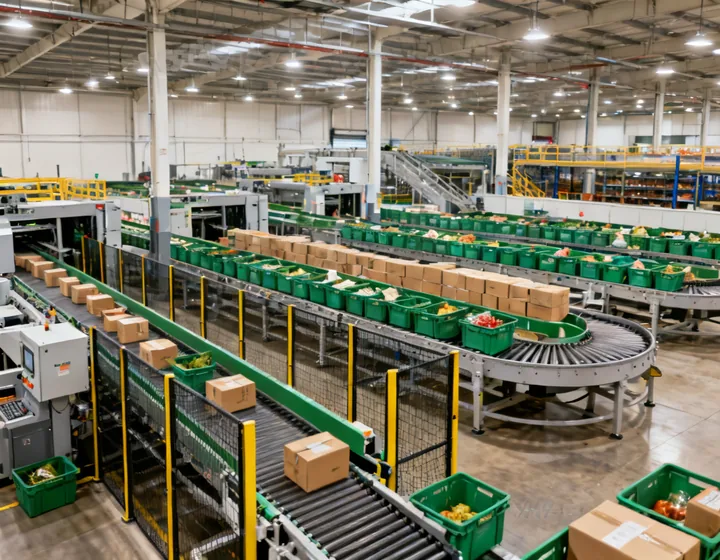
Promotion peaks, high SKU depth and short cutoffs stress induction balance, recirculation and chute capacity.
Store aisle sequencing and mixed case sizes rewrite merge timing and mixed-SKU pallet patterns.
Line-side tote and pallet handoffs must respect takt, work-order status and blocked-station response.
Loose dimensions, gap creation and divert density dominate cross-belt and shoe-sorter assumptions.
Sensor drift, belt traction and safe recovery access change during prolonged temperature-controlled stops.
These narrative cards show how an operating profile alters design questions. They are not named customer references or verified before/after percentages.
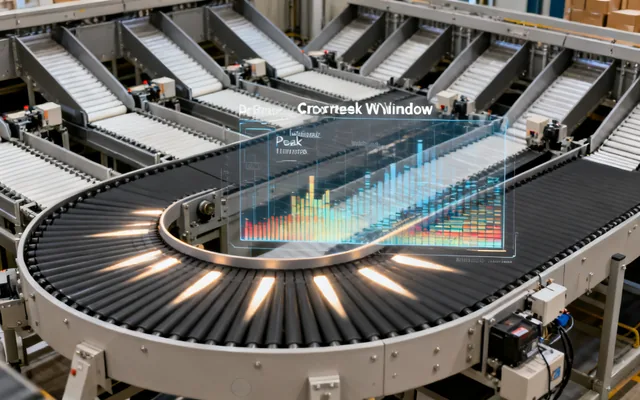
A fulfillment profile with 12,000+ active SKUs and a four-hour promotion peak required induction lane balancing and explicit lost-read recirculation capacity before divert density could be locked.
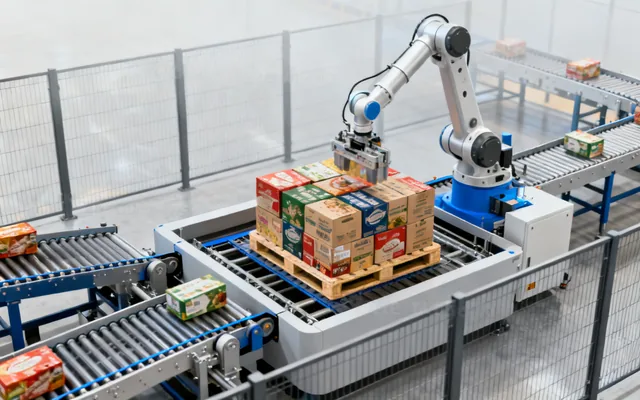
Grocery shipping needed layer patterns that preserve store aisle order while keeping accumulation short enough that a blocked dock door did not starve upstream merges.
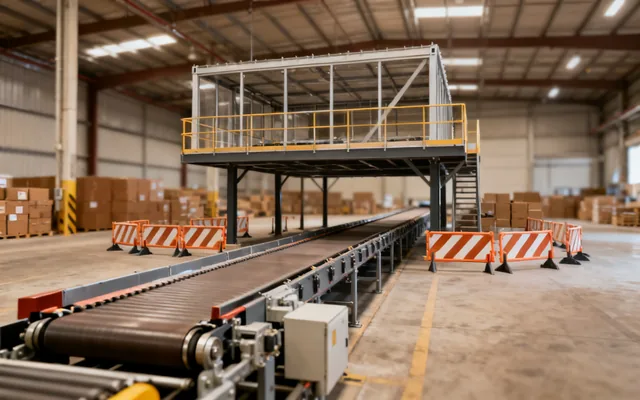
A multi-zone DC kept shipping live by releasing one divert bank at a time, with a documented fallback pack path and rollback trigger tied to SAT observation windows.
These are industry trade-offs, not brand slogans. State which side your operating profile can sustain before locking divert density or control architecture.
One view prioritizes maximum cartons/hour or order lines/hour under a clean design case with ideal gap creation and empty chutes. The opposing view prioritizes buffer occupancy limits, recirculation capacity, mean time to repair after a jam, and graceful degradation when a divert bank is offline. Bastian Solutions asks both sides to publish the same SKU velocity mix and peak duration before either claim is compared.
Centralized WCS/WES coordination can optimize global release and present one operational view across conveyors, cross-belt sorter modules and a palletizing pattern cell. Modular controls can isolate a failed lane or robot cell and reduce single-vendor change risk, but they demand a stronger material-state contract across OPC UA or fieldbus boundaries. Neither architecture removes the need for a throughput acceptance test tied to FAT and SAT evidence.
Fixed automation versus flexible robotics: deterministic conveyor and sorter machinery usually wins on stable, high divert accuracy for known parcel or case profiles; flexible robotics can adapt induction or palletizing cells faster when SKU mix or order structure changes weekly. Hybrid scopes are common—fixed sortation with a robotic palletizer—provided functional safety and performance level (PL) allocations are documented for each cell.
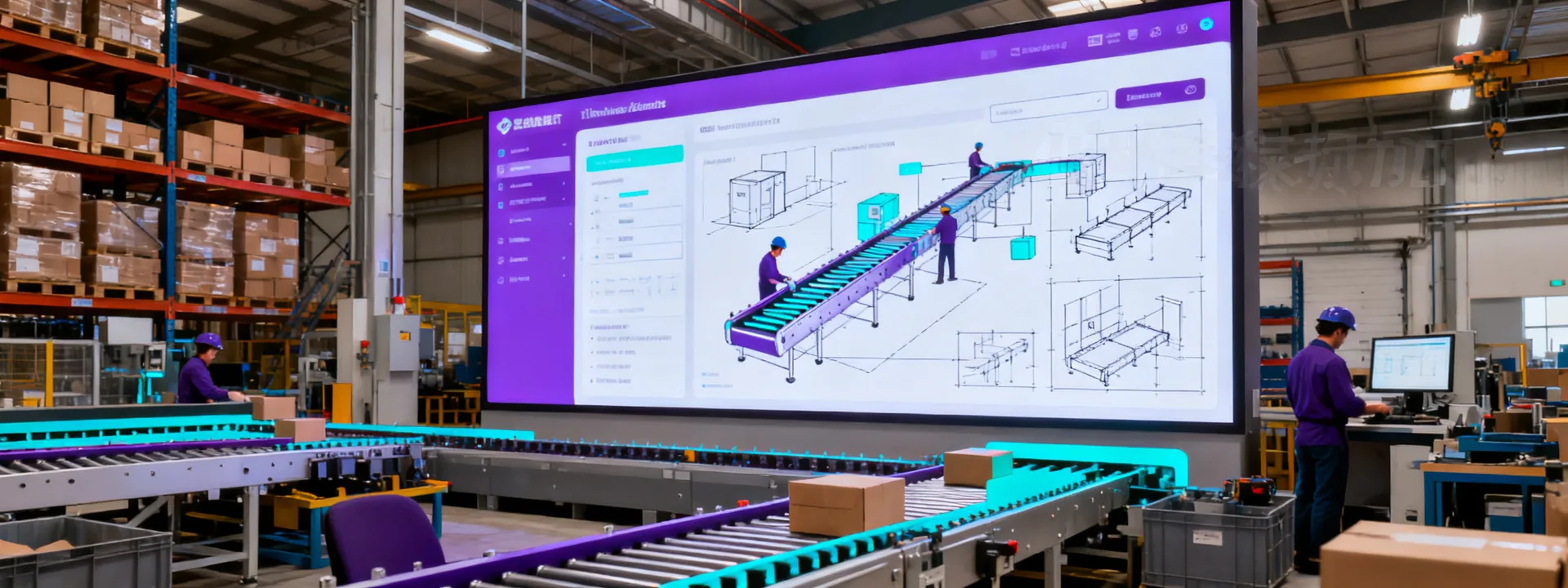
Bring SKU depth, peak factor, temperature, pallet/tote mix and the exception list that must remain recoverable.
Plan a site assessment